1. Riyadh Transit Overview: The Great Shift
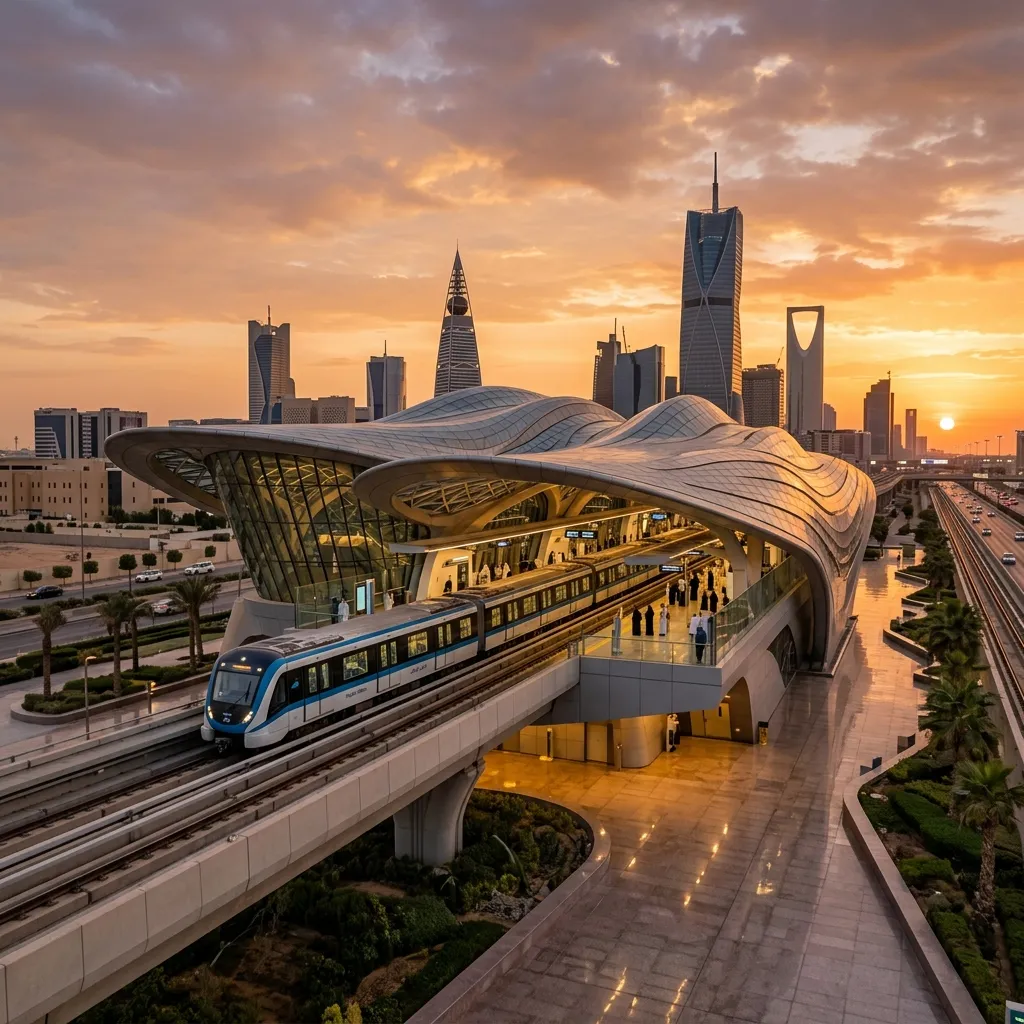
Riyadh, the sprawling capital of Saudi Arabia, is undergoing one of the most ambitious urban transitions in modern history. Historically designed as a car-centric metropolis defined by massive highway corridors and private vehicle ownership, the city has transformed into a highly connected, modern transit hub. Driven by the objectives of Saudi Vision 2030 and preparing for historic events like the FIFA World Cup 2034, Riyadh has built a state-of-the-art public transit network that serves as the backbone of tourist and local travel.
For decades, visitors to Riyadh had to rely exclusively on taxis, rental cars, or private drivers. Now, with the complete rollout of the massive Riyadh Metro project and its integrated bus feeders, the capital is highly accessible, navigable, and tourist-friendly. Using public transit is not only a budget-friendly option but also an escape from the city’s peak-hour traffic congestions.
💡 Planning a wider exploration of the capital? Make sure to read our comprehensive Riyadh Travel Guide for deep-dives into historical areas, top tourist landmarks, Najdi cuisine enclaves, and hotel districts.
2. The Riyadh Metro System: A Tourist's Best Friend
The Riyadh Metro is the crown jewel of the city’s public transportation network. Spanning six fully automated, driverless lines with 85 stations, it covers over 176 kilometers of track. Designed by some of the world's most prestigious architectural firms, the metro stations themselves are futuristic landmarks, equipped with full climate control, high-speed Wi-Fi, food retail kiosks, and strict security networks.
For tourists, the metro offers a rapid, reliable, and air-conditioned escape from the intense desert heat. It connects almost every major cultural, commercial, and financial district in the capital. Because it is completely separated from surface traffic, the metro provides predictable travel times, allowing you to plan your itineraries with absolute precision.
The 6 Lines Explained
To navigate the network effectively, it is essential to understand the layout and key tourist connections of the six color-coded metro lines:
- Line 1 (Blue Line) — Olaya & Batha Corridor Key Connectivity: Runs north-to-south along Olaya Street and Batha Street. This is the primary route for shopping, business, and historic exploration. It directly connects the modern skyscrapers of Olaya with the historic souks of Al-Batha and the King Abdulaziz Historical Center.
- Line 2 (Red Line) — King Abdullah Road Corridor Key Connectivity: Runs east-to-west along King Abdullah Road. It connects major educational institutions, commercial hubs, and provides smooth transfer linkages to the Diplomatic Quarter via feeder bus stations.
- Line 3 (Orange Line) — Madinah Road & Al-Qassim Road Key Connectivity: The longest line in the network, running east-to-west. Crucially, it serves as a major connection to suburban residential enclaves and integrates directly with the southern bus lines.
- Line 4 (Yellow Line) — KAFD Express to Airport Link Key Connectivity: Runs from the futuristic King Abdullah Financial District (KAFD) directly to King Khalid International Airport (RUH). This is an express line designed for business travelers and tourists arriving in the capital, providing a direct link to the modern north.
- Line 5 (Green Line) — King Abdulaziz Road Corridor Key Connectivity: Runs north-to-south parallel to the Blue Line, linking government ministries, the historic Riyadh Station (for trains to the Eastern Province), and key historical plazas.
- Line 6 (Purple Line) — Abdulrahman bin Awf Corridor Key Connectivity: Runs in a half-loop across the eastern districts, linking Line 4 and Line 2, and servicing university campuses and commercial recreation zones.
Iconic Architectural Hubs
The Riyadh Metro is not merely a functional transit network; it is a global showcase of modern architectural design. Three landmark interchange stations serve as the architectural hubs of the network:
- King Abdullah Financial District (KAFD) Station (Designed by Zaha Hadid Architects): Located in the heart of Riyadh’s new financial hub, this station is a futuristic masterpiece defined by organic, flowing structures resembling desert dunes carved by wind. Spanning over 20,000 square meters, it serves as an interchange hub for Lines 1, 4, and 6, and is directly integrated with the district’s elevated skywalk system.
- Olaya Metro Station (Designed by Gerber Architekten): Serving as the main interchange between the Blue and Red lines, this massive station features a glass-canopied undulating roof structure that lets natural light flood into the subterranean platforms. It is surrounded by beautifully landscaped public plazas, water features, and recreational green spaces, creating a vibrant public park in the middle of Olaya's commercial core.
- Western Station (Designed by Snøhetta): Serving as the transit anchor for the western suburbs, this station is inspired by traditional Najdi mud-brick fortresses, blending ancient sandstone color palettes with ultra-modern glass canopies. It integrates the metro network with a regional bus terminal and a large park-and-ride facility.
🏨 Not sure where to base yourself in the city? Read our detailed Riyadh Best Districts Guide to align your hotel choice with the closest Metro transit stations.
Fares & Payment
The ticketing system of the Riyadh Metro is completely digitized, integrating seamlessly with mobile devices and bank cards. You do not need to buy paper tickets if you prefer to travel cardless. Here is a breakdown of the transit fares and payment channels:
| Ticket Class / Type | Single Fare (SAR) | Validity / Period | Best Suited For |
|---|---|---|---|
| Standard Class Single | 6 SAR | 2 Hours (incl. bus transfers) | Casual single trips |
| First Class Single | 10 SAR | 2 Hours | Maximum space and comfort |
| Daily Pass (Unlimited) | 20 SAR | 24 Hours | Active tourist sightseeing days |
| Weekly Pass (Unlimited) | 70 SAR | 7 Days | Weekly stays or business travelers |
| Monthly Pass (Unlimited) | 230 SAR | 30 Days | Expatriates and long-stay visitors |
Accepted Payment Methods:
- Contactless Credit/Debit Cards: Tap your Visa, Mastercard, or local *mada* card directly at the fare gates.
- Apple Pay & Google Pay: Supported at all station barriers via smartphones and smartwatches.
- Mawqif Smart Card: The physical, rechargeable transit card. You can purchase this at automated kiosks in any station. It is ideal if you prefer not to use your foreign credit cards directly.
- Riyadh Transit App: Allows you to buy digital tickets and passes on your phone, which generate a QR code to scan at the gate.
3. Ride-Hailing: Uber, Careem & Jeeny
While the metro and bus network are excellent for point-to-point travel between major districts, ride-hailing remains a crucial tool for door-to-door convenience, especially when navigating locations off the main transit corridors.
Why Use Ride-Hailing in Riyadh?
- Safety & Transparency: Ride-hailing apps provide upfront pricing, tracked routes, driver profiles, and vehicle registration verification. This completely eliminates any language barriers or price negotiations with traditional street cab drivers.
- English-Speaking Drivers: Most drivers on premium platforms like Uber and Careem speak conversational English and are highly familiar with major tourist destinations.
- Cashless Transactions: You link your international credit card directly to the app, avoiding the need to carry physical SAR cash for transit.
Major Platforms Available:
- Uber: The most widely recognized global app. Highly reliable, offering standard (UberX), premium (UberOne), and larger family vehicle tiers.
- Careem: The Middle East’s leading ride-hailing app (owned by Uber). It features excellent local driver availability and frequently offers promo codes for sightseeing destinations.
- Jeeny: A popular local alternative that offers budget-friendly rides. It is frequently cheaper than Uber and Careem, though the vehicles may be slightly more modest.
Average Ride-Hailing Cost Matrix (Within Riyadh Center):
- Short trips (under 5 km): 15 – 25 SAR ($4.00 – $6.60 USD)
- Medium trips (5 to 15 km): 25 – 45 SAR ($6.60 – $12.00 USD)
- Longer cross-city trips (15+ km): 50 – 80 SAR ($13.30 – $21.30 USD)
⚠️ Important Safety Tip: Always verify that the license plate and driver photo in the app match the physical vehicle before entering. Local regulations are strict, but taking this basic precaution is always recommended.
4. Getting from King Khalid Airport (RUH) to Downtown
King Khalid International Airport (RUH) is located approximately 35 kilometers north of downtown Riyadh. Depending on your budget, luggage, and destination, you have three primary transit options to reach the city center:
| Transfer Option | Average Cost | Travel Time | Pros & Cons |
|---|---|---|---|
| Riyadh Metro Line 4 | 12 SAR ($3.20 USD) | 30 – 35 Minutes | Pros: Cheapest option, escapes highway traffic, direct to KAFD. Cons: Harder with massive luggage. |
| Ride-Hailing (Uber/Careem) | 80 – 120 SAR ($21.30 – $32.00 USD) | 35 – 50 Minutes | Pros: Direct to hotel door, convenient. Cons: Subject to highway traffic delays. |
| Private Pre-booked Transfer | 150 – 250 SAR ($40.00 – $66.60 USD) | 35 – 50 Minutes | Pros: Meet-and-greet in arrival hall, best for families. Cons: Most expensive option. |
Airport Transfer Details:
- Option 1: The Metro Line 4 Link. KAFD and northern hotel districts are directly linked via Line 4. The metro station at RUH is connected to Terminals 1 to 4 via air-conditioned skywalks. You tap your contactless card and board. If your hotel is located in Olaya or central Riyadh, you will change to Line 1 (Blue Line) at the KAFD interchange station.
- Option 2: Ride-Hailing Pick-Up Zones. If using Uber or Careem, follow the signs inside the terminal to the designated "Ride-Hailing Pick-Up Zones" (clearly marked outside Terminals 1, 2, and 5). Do not accept rides from drivers offering private services in the arrival terminal corridors, as these are unauthorized and unregulated.
- Option 3: Pre-Booked Private Shuttles. If traveling in a large family group or carrying extensive sports/filming gear, booking a private vehicle via your hotel concierge is highly recommended. The driver will meet you with a name placard directly in the arrivals hall.
5. Safety & Etiquette for Tourists
Riyadh is globally recognized as one of the safest cities in the world, and this safety carries over directly to the public transit network. However, to ensure a smooth and respectful journey, it is important to observe local transit rules and cultural etiquette:
- Gender Seating Rules: There is no mandatory gender segregation on the Riyadh Metro or buses. Women are free to sit anywhere they choose. However, to cater to local preferences, every metro train features a dedicated Family & Women Carriage (clearly marked with pink signs). Single male travelers are strictly prohibited from entering these designated family carriages.
- Dress Code: Both men and women are expected to dress modestly when using public transport. Shoulders and knees must be covered. For women, wearing an abaya is no longer legally required, but loose-fitting, respectful clothing is highly recommended.
- Eating & Drinking Ban: Eating, drinking, and chewing gum are strictly prohibited on metro platforms and inside the trains. Violating this rule can result in an on-the-spot fine of 200 SAR.
- Prayer Times: Unlike retail stores and restaurants that sometimes close briefly during daily prayers, the Riyadh Metro and buses continue operating throughout the day. However, you may experience minor shifts in crowd density around prayer times, as commuters move to and from nearby mosques.
6. Frequently Asked Questions
Q: Is the Riyadh Metro safe for solo female travelers?
Yes. Riyadh has very low street crime rates, and the metro is heavily monitored by security personnel and security cameras. The network is clean, well-lit, and very safe at all hours of operation. Dedicated family cars are available on every train if preferred.
Q: Can I use my contactless credit card on the Metro?
Yes. The metro system has completely integrated contactless payments. You can tap your international credit card (Visa or Mastercard), local mada card, or smartphone using Apple Pay/Google Pay directly at the gates without buying a paper ticket.
Q: Do I need a local Saudi SIM card to use transport apps?
Yes. Apps like Uber, Careem, and Jeeny require SMS verification for registration. Drivers also frequently call passengers to clarify pickup points. Getting a local SIM card (such as stc, Mobily, or Zain) at the airport terminal upon arrival is highly recommended.
Q: Does the Metro connect directly to the airport terminals?
Yes. Line 4 (Yellow Line) connects directly to Terminals 1, 2, 3, and 4 of King Khalid International Airport (RUH) via climate-controlled skywalks, making it very easy for travelers to transit from the sky to the rail.